Analysis of tumor-derived and cross-presented peptide antigens defines improved immunotherapeutic strategies

Analysis of tumor-derived and cross-presented peptide antigens defines improved immunotherapeutic strategies
Cui, Y.; Phuong, K.; Temple, H.; Wisdiom, A. J.; Abdelfattah, N. S.; Spranger, S.; White, F.
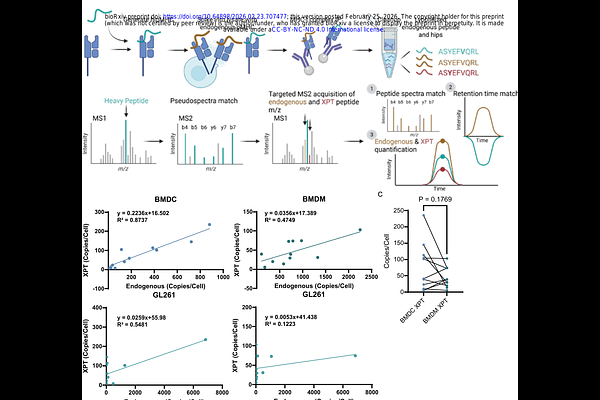
AbstractBackground: Cross-presentation of tumor antigens by antigen-presenting cells (APCs) is essential for initiating effective anti-tumor T cell immunity. The presence of cross-presenting immune cells across multiple solid tumors correlates with improved clinical outcomes. Despite the importance of this process, the identities and characteristics of tumor-derived MHC-I antigens that are cross-presented by APCs remain largely undefined, limiting rational design of targeted immunotherapies. Methods: We performed an immunopeptidomic analysis of cross-presented glioblastoma (GBM) antigens on APCs, including bone marrow-derived macrophages, bone marrow-derived dendritic cells, and splenic dendritic cells, using SILAC labeling and in vitro co-culture systems. Additionally, we also profiled endogenous APC and tumor antigen repertoires. We made selected cross-presented antigen targets into mRNA vaccines and evaluated their immunogenicity in comparison to tumor endogenous antigens in vivo. Results: We identified over one thousand putative cross-presented GBM antigens. Comparative analysis of endogenous APC and tumor antigen repertoires revealed that cross-presented antigens possess distinct features and are predominantly shaped by intrinsic antigen processing and presentation pathways within APCs, resulting in limited cross-presentation of tumor-specific epitopes. Two doses of mRNA encoding cross-presented tumor-specific epitopes delayed tumor growth and elicited robust antigen-specific T cell responses. Conclusion: Our findings define the landscape and constraints of tumor antigen cross-presentation in GBM and establish a framework for improved antigen selection in the development of next-generation GBM immunotherapies.