Synergistic CRISPR-Cas Antimicrobials through Essential and Defensive Gene Cotargeting in Staphylococcus aureus

Synergistic CRISPR-Cas Antimicrobials through Essential and Defensive Gene Cotargeting in Staphylococcus aureus
Dooley, D. S.; Trinh, C. T.
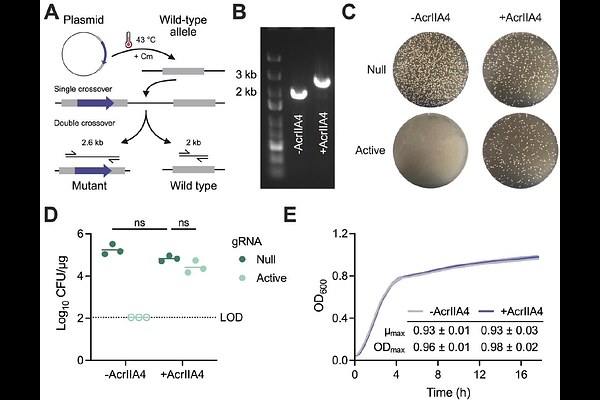
AbstractMultidrug-resistant pathogens pose a major threat to One Health. Within the past decade, CRISPR-Cas systems have been explored as sequence-specific antimicrobials. While chromosomal injury has been considered the primary mechanism underlying pathogen killing by CRISPR-Cas antimicrobials, the synergistic role of gene disruption together with chromosomal injuries remains poorly understood. In this study, we characterized a new class of CRISPR-Cas antimicrobials that simultaneously cotarget essential and defensive genes to enhance potency against the clinically relevant pathogen Staphylococcus aureus. High-throughput CRISPR screening identified top-performing guide RNAs for twenty functionally diverse essential and defensive genes across the S. aureus genome. CRISPR-Cas antimicrobials were modularly formulated to target single or multiple gene loci and packaged in phage-like particles for specific delivery. By engineering an S. aureus production host with a chromosomally integrated anti-CRISPR protein, we demonstrated efficient production of CRISPR-Cas antimicrobials targeting any S. aureus chromosomal locus without self-targeting. Characterization of CRISPR-Cas antimicrobials with single guide RNA designs revealed that potency varied according to targeted gene function, achieving up to a 4-log10 reduction in viability and outperforming traditional antibiotics. Multiplexed configurations were consistently more effective than single-targeting designs, with the top-performing design demonstrating a 4.7-log10 reduction in viability. Cotargeting essential and defensive genes revealed synergies that led to improved lethality and attenuated resistance, with enhanced activity in biofilms compared to traditional antibiotics. Genes involved in signaling and stress responses were important defensive targets for developing cotargeting CRISPR-Cas antimicrobials. Overall, this study establishes design principles for synergistic CRISPR-Cas antimicrobials applicable to next-generation precision antimicrobial development. SIGNIFICANCEThe ability to effectively combat multidrug-resistant pathogens is of primary importance to One Health. This study develops a generalizable design principle for formulating potent CRISPR-Cas antimicrobials that exploit synergistic cotargeting strategies for enhanced pathogen killing. In addition to chromosomal injuries, we found that disruption of gene function plays a crucial role in determining the lethality of CRISPR-Cas antimicrobials, providing a generalizable framework for effective CRISPR-Cas antimicrobial design. The development of a CRISPR-Cas antimicrobial production host with stable, chromosomally integrated anti-CRISPR genes greatly expands the modularity, adaptability, and efficiency of formulating CRISPR-Cas antimicrobials and enables deeper insights into the molecular mechanisms involved in eliminating multidrug-resistant pathogens.