Mitochondrial-targeted therapy with elamipretide preserves cardiac function and prevents late mortality in murine sepsis-induced cardiac dysfunction.

Mitochondrial-targeted therapy with elamipretide preserves cardiac function and prevents late mortality in murine sepsis-induced cardiac dysfunction.
Vu, J.; Wagg, C. S.; Holody, C. D.; Wong, A.; Baidwan, T.; Lo, M.; Khodabocus, I.; Liu, S. N.; Macala, K. F.; Dufour, A.; Ussher, J.; Lemieux, H.; Lopaschuk, G. D.; Bourque, S. L.
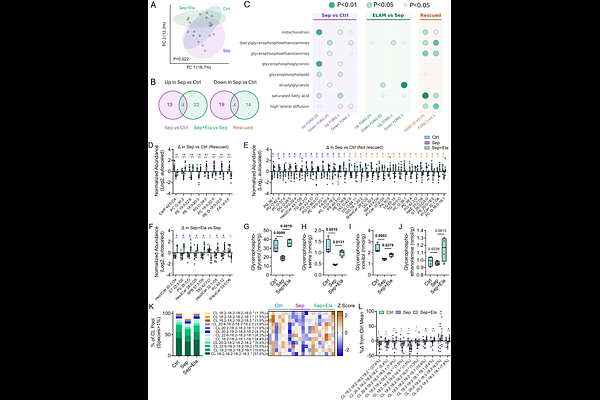
AbstractSepsis-induced cardiac dysfunction (SICD) occurs in nearly half of septic patients, is associated with increased mortality, and lacks targeted therapy. Emerging evidence implicates impaired mitochondrial function and metabolic inflexibility as central contributors to myocardial depression. Here, we characterized SICD in a murine model of polymicrobial sepsis and evaluated the therapeutic potential of the cardiolipin-stabilizing peptide elamipretide (Ela). Sepsis induced marked impairments in cardiac performance, accompanied by reductions in cardiac cardiolipin content, impaired mitochondrial respiratory capacity localized to complex I, and altered substrate utilization. Integration of stable isotope metabolic flux tracing with lipidomic, metabolomic, and proteomic analyses identified a convergent metabolic bottleneck at the level of the electron transport system. This defect was associated with upstream accumulation of acetyl-CoA, Co-A esters, and ketone bodies, consistent with impaired oxidative flux and energetic failure. Administration of a single early dose of Ela restored cardiolipin content, complex I function, normalized metabolic flux, improved cardiac function during both acute sepsis and recovery, and completely prevented late sepsis-related mortality. These findings identify cardiolipin-dependent mitochondrial dysfunction as a central pathogenic mechanism underlying SICD and position mitochondrial-targeted therapy as a promising therapeutic strategy in sepsis.