Genomic analyses demonstrate the absence of genetic sex determination in the dioecious conifer Taxus baccata

Genomic analyses demonstrate the absence of genetic sex determination in the dioecious conifer Taxus baccata
Bross, D.; Mittelbach, J.; Pippel, M.; Mader, M.; Lazic, D.; Uelze, L.; Schroeder, H.; Pers-Kamczyc, E.; Kurtz, S.; Winkler, S.; Müller, N. A.; Kersten, B.
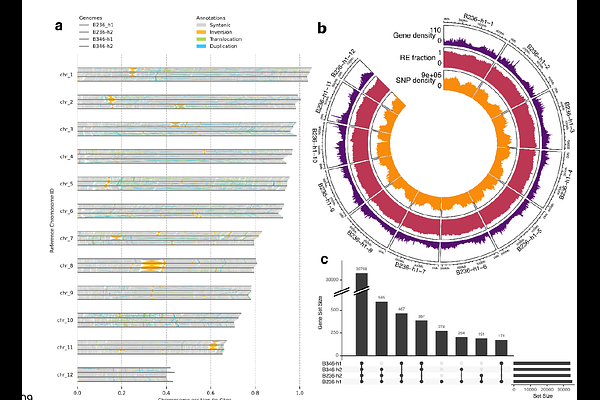
AbstractHundreds of plant lineages have independently evolved dioecy, i.e., separation of female and male flowers on different individuals. In all dioecious plants investigated at the molecular level to date, sex is determined genetically through a sex-determining region (SDR). SDRs have mostly been studied in angiosperms, although dioecy is relatively more common among gymnosperms. Here, we investigate sex determination in the gymnosperm Taxus baccata. We assembled four haplotype-resolved chromosome-level genomes for one female and one male tree, with an average size of 10.04 Gb, and generated resequencing data for 100 phenotypically sexed individuals. Strikingly, k-mer analyses, genome-wide association studies and differential coverage analyses demonstrate the absence of an SDR in the T. baccata genome. This indicates a non-genetic mechanism of sex determination, most likely via a sex-specific epiallele. Given that T.baccata is the first species studied among a large group of conifers, our findings suggest that such a mechanism might be widespread.