Importance of functional diversity in benthic remineralization: a new perspective through the lens of Nares Strait, a key Arctic gateway

Importance of functional diversity in benthic remineralization: a new perspective through the lens of Nares Strait, a key Arctic gateway
Combaz, T.; Bluhm, B.; Witte, U.; Archambault, P.
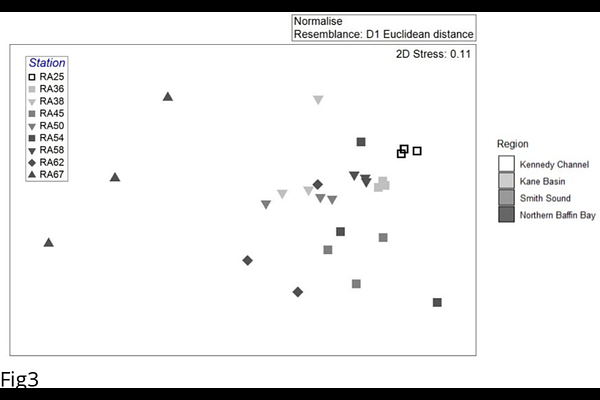
AbstractBenthic remineralization of organic matter is key to carbon and nutrient cycling, influencing both long-term carbon storage in the sediments and the release of nutrients that support primary production in the water column. With its multiple forms and ages of sea ice, Nares Strait in the Canadian Arctic offers a unique opportunity to address the knowledge gap of variability of benthic remineralization rates along a natural sea ice gradient. Here, we incubated sediment cores in different locations in Nares Strait characterised by different sea ice conditions ranging from first-year ice to multi-year ice, to measure oxygen and nutrient fluxes. To identify potential drivers, we measured environmental variables, identified macrofauna and calculated a suite of taxonomic and functional diversity indices. Our analyses showed that benthic fluxes varied significantly between the northern and southern regions of Nares Strait. The presence of deposit feeders and sea ice cover (number of days since ice-free) were the main drivers in benthic fluxes, explaining 22.6% and 13.9% of the benthic flux variation, respectively. Overall, functional diversity was a better predictor of benthic fluxes than taxonomic diversity, indicating its primary importance in controlling benthic ecosystems functioning. Our results reveal that, from a benthic biogeochemical point of view, Nares Strait seems to be dissected into two main sub-regions: (i) a permanently and highly sea ice-covered area north of Kennedy Channel, resembling deeper regions of the Arctic Ocean and (ii) a seasonally ice-covered area between the North Water Polynya and Kane Basin, where benthic fluxes values are equivalent to those reported in similar continental Arctic shelves. Consequently, the rapid functional shifts resulting from the ongoing decline in sea ice could enhance benthic remineralisation rates if deposit feeder were to become dominant in certain areas, reducing the role of the region and by extension, the Arctic, as a carbon sink.