A critical signaling role for diacylglycerol in phagocytosis of M. tuberculosis

A critical signaling role for diacylglycerol in phagocytosis of M. tuberculosis
Griffith, A. M.; Garcia, M.; Guzman, G.; Tafesse, F.
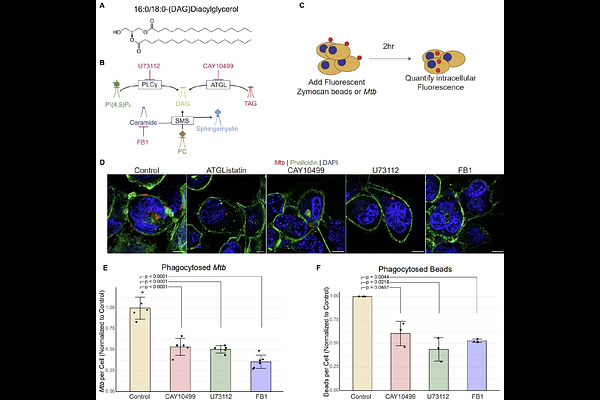
AbstractMycobacterium tuberculosis (Mtb) establishes infection by entering host phagocytes through phagocytosis. While host lipids are known to influence this process, the specific contribution of the signaling lipid diacylglycerol (DAG) remains poorly defined. Here, we identify DAG as a critical regulator of phagocytosis. Disruption of DAG production, through inhibition or genetic deletion of adipose triglyceride lipase (ATGL) and phospholipase C gamma 2 (PLC{gamma}2), two major pathways that generate cellular DAG pools, markedly reduced uptake of both Mtb and zymosan-coated beads. Notably, loss of ATGL or PLC{gamma}2 did not impair receptor trafficking to the cell surface or cargo binding, indicating that DAG is not required for phagocytic recognition or initiation, but instead for a later step in phagosome formation. Mechanistically, cells lacking ATGL or PLC{gamma}2 displayed constitutive phosphoinositide 3-kinase (PI3K) phosphorylation, suggesting that dysregulated intracellular signaling prevents completion of phagocytosis. These findings uncover a previously unappreciated role for DAG biosynthesis in coordinating intracellular signaling required for phagocytosis and provide new insight into host pathways that govern Mtb entry.