Sex-Specific Vulnerability to Radiofrequency Electromagnetic Radiation-Induced Reproductive and Neurological Impairment in Mice

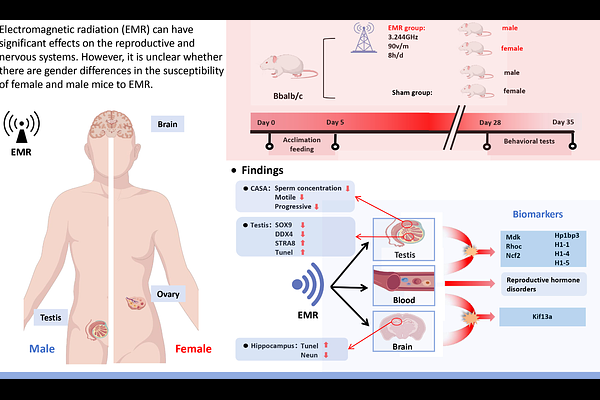
Sex-Specific Vulnerability to Radiofrequency Electromagnetic Radiation-Induced Reproductive and Neurological Impairment in Mice
Zhu, K.; Li, F.; Liu, Z.; Guo, J.; Yang, X.; Li, C.; Shen, J.; Wang, L.; Yan, H.
AbstractElectromagnetic radiation (EMR) constitutes a pervasive environmental stressor, yet the sex-specific vulnerabilities to its biological effects remain inadequately characterized. This study investigated the differential impacts of 3.2 GHz pulsed EMR on reproductive and neurological functions in male and female mice following a four-week exposure regimen. We identified a pronounced sexual dimorphism in systemic and organ-specific responses. Male mice exhibited a primary vulnerability in the reproductive axis, manifesting as severe spermatogenic impairment, including depletion of the spermatogonial stem cell pool, disruption of sperm chromatin remodeling, and consequent declines in sperm quality and quantity. In contrast, exposed females showed preserved ovarian function but displayed marked neurobehavioral deficits, including increased anxiety- and depressive-like behaviors, and cognitive impairment, which were correlated with neurodegeneration in the hippocampus and prefrontal cortex. Proteomic analyses revealed distinct sex-specific biomarker profiles, with serum levels of Mdk, histone H1 variants (H1-1, H1-4, H1-5), Hp1bp3, Ncf2, and Rhoc strongly associated with male testicular dysfunction, while decreased levels of the synaptic motor protein KIF13A in serum and brain tissue were linked to female neurological impairment. Our findings delineate clear sex-divergent pathological pathways that target male spermatogenesis and female neurocognitive function and propose novel circulating protein biomarkers. This work provides a critical foundation for sex-aware risk assessment and the development of targeted preventive strategies against EMR-associated health risks.