Detecting and Subtyping Ketoacidosis from Metabolomic Patterns in Forensic Casework

Detecting and Subtyping Ketoacidosis from Metabolomic Patterns in Forensic Casework
Monte, R. E. C.; Magnusson, R.; Söderberg, C.; Green, H.; Elmsjö, A.; Nyman, E.
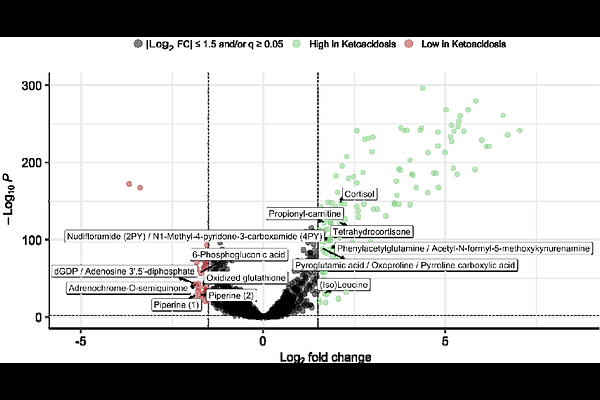
AbstractSubtyping of ketoacidosis, a metabolic state characterized by blood acidification due to various causes, remains challenging in forensic casework. Postmortem omics samples paired with machine learning offers an independent tool to address this challenge. However, such data, especially related to real forensic cases, are rare. In Sweden, high-resolution mass spectrometry data routinely collected in forensic toxicology, can be leveraged for metabolomic analysis. Here, we integrate postmortem metabo-lomics and machine learning models to detect and subtype ketoacidosis-related deaths using real forensic cases in Sweden. From femoral blood samples of 109 alco-holic ketoacidosis cases, 220 diabetic ketoacidosis cases, 140 hypothermia cases, and 1,229 controls (hanging cases), we developed and tested three machine learning models, which achieved over 90% accuracy in ketoacidosis detection and over 80% in subtyping. Validation with independent cohorts (21 starvation cases, 29 alcoholic con-trols, and 40 diabetic controls) confirmed robustness with over 80% of starvation cases classified as ketoacidosis-related. Feature clustering highlighted metabolites such as cortisol to be important for subtyping. In summary, our findings demonstrate that combining machine learning with postmortem metabolomics enables accurate detection and subtyping of ketoacidosis-related deaths, which is useful for forensic case-work.