RNA dysregulation and compromised neuronal identity drive pathogenesis in Senataxin-associated ALS

RNA dysregulation and compromised neuronal identity drive pathogenesis in Senataxin-associated ALS
Giannini, M.; Gostan, T.; El Aabidine, A. Z.; Bellieres, C.; Nedelec, S.; Porrua, O.
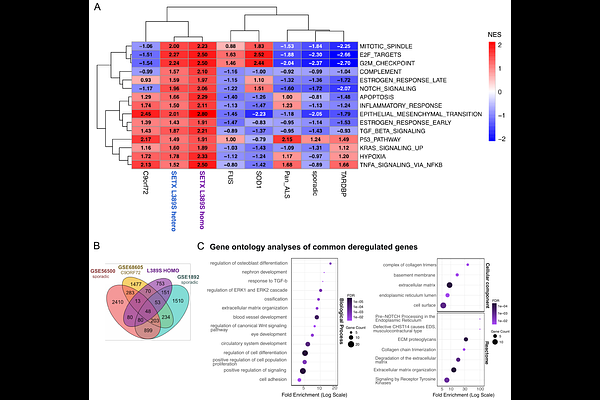
AbstractRNA dysregulation is a recognized contributor to neurodegenerative diseases such as amyotrophic lateral sclerosis (ALS), the most common motor neuron (MN) disease. However, the molecular mechanisms linking defects in RNA metabolism to selective neuronal vulnerability remain poorly understood. Alterations in the cellular levels of R-loops -structures forming by reannealing of the nascent RNA with the template DNA during transcription- have been observed in neurodegeneration, but it is unclear how perturbations in R-loop homeostasis contribute to neuronal dysfunction. Here we investigate the molecular basis of a juvenile form of ALS dubbed ALS4 that is caused by mutations in the helicase SETX, which plays important roles in the resolution of R-loops and transcription termination. Using isogenic human induced pluripotent stem cell-derived MNs, we show that ALS4-associated SETX mutations induce progressive axonal defects and widespread transcriptomic alterations, including reduced expression or altered splicing of transcripts critical for neuronal function. ALS4 MNs exhibit a transcriptional signature marked by cellular stress, aberrant cell cycle re-entry, and compromised neuronal identity that is partially shared by other forms of ALS. Mechanistically, these defects are partly driven by downstream aberrant activation of the TGF-{beta} signaling pathway, whose pharmacological inhibition ameliorates axonal defects. Finally, our analyses support a link between mutant SETX ectopic activity at R-loops and the observed alterations in RNA expression and splicing, providing new insights into how RNA dysregulation can drive neuronal dysfunction Altogether, our work reveals how perturbations at the interface of transcription and R-loop metabolism can reshape neuronal identity and drive disease. TeaserDeregulation of TGF-{beta} signaling drives axonal defects and compromised motor neuron identity in senataxin-mediated ALS