Can small reductions in Rubisco content improve nitrogen use in wheat without negatively impacting biomass or grain yield?

Can small reductions in Rubisco content improve nitrogen use in wheat without negatively impacting biomass or grain yield?
Alotaibi, S.; Matthews, J. A.; Driever, S. M.; Sparks, C. A.; Parry, M. A.; Lawson, T.; Raines, C. A.
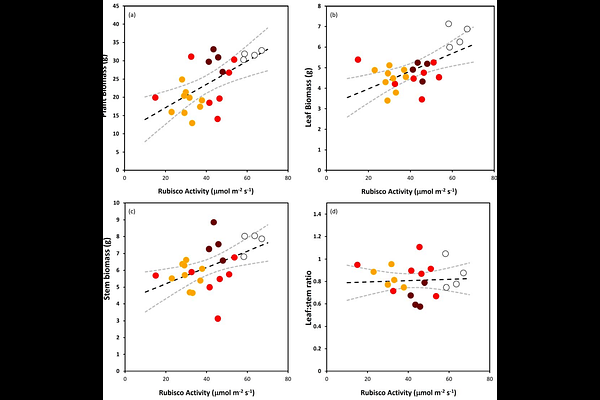
AbstractIn this study, the level of Rubisco protein was reduced in wheat using RNAi, to test the hypothesis that photosynthesis, growth, and grain yield could be maintained whilst improving nitrogen use efficiency. The RNAi Rubisco wheat plants, with a Rubisco activity of less than 70% of wild type (WT) plant levels, had reduced photosynthesis, reductions in leaf and stem biomass and decreased seed yield. Interestingly, in the wheat RNAi Rubisco lines that had a small (<30%) reduction in Rubisco activity, the seed number, total seed weight and harvest index were comparable to that of WT type plants. However, no improvement in photosynthetic nitrogen use efficiency (PNUE) was evident in any of the RNAi Rubisco lines. Notably, PNUE was lower than for WT wheat plants in the RNAi lines with more than a 30% reduction in Rubisco activity. This result was unexpected and caused by an accumulation of N in both the leaves and seeds. At present we do not have an explanation for this but one possible hypothesis is that it could be due to slower growth caused by a reduction in source strength in the RNAi plants, which in turn resulted in changes to carbon and nitrogen allocation.