Vibration's frequency and intensity for optimal setup for enhancement bone response in small rodents: A systematic review and Bayesian network meta-analysis

Vibration's frequency and intensity for optimal setup for enhancement bone response in small rodents: A systematic review and Bayesian network meta-analysis
Silva, N. R. S.; Engman, T.; Stoelben, K. J. V.; Bursa, N.; Zang, A. X.; Soloniuk, K. S.; Hong, J. M.; Thompson, W. R.; Uzer, G.
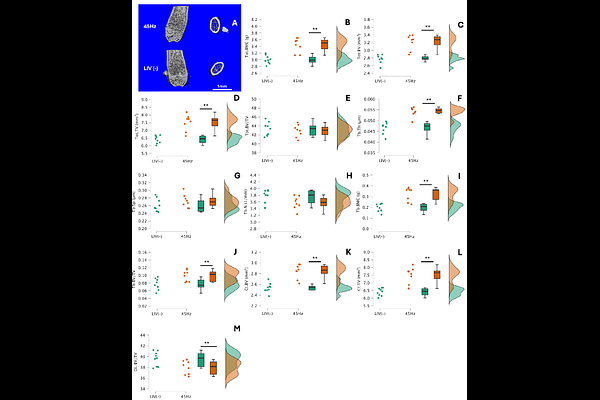
AbstractLow-intensity vibration (LIV) is a non-invasive mechanical stimulus capable of regulating skeletal adaptation and cellular signaling pathways involved in bone remodeling. Despite growing interest in LIV, substantial methodological heterogeneity persists in the selection of experimental vibration parameters such as frequency, expressed in Hertz (Hz) and intensity, defined as earth's gravitational field (g) (9.81 m/s2). Focusing on micro-computed tomography (CT) derived trabecular bone volume fraction (BV/TV) as the main outcome measure, this study sought to synthesize the effects of different LIV frequency and intensity on BV/TV in small rodents (mice and rats) as they remain as the most studied pre-clinical model. To accomplish this, we performed a systematic review searching for publications in English on PubMed, Web of Science, CINAHL, and Embase databases. Two independent investigators followed inclusion criteria to select only peer-reviewed studies with mature mice, using whole-body vibration experiments without other co-variables. We further restricted to include studies that analyzed non-fractured bones and compared pre- and post-intervention or control values. In addition to these core criteria, a detailed hierarchical screening framework was applied during full-text review. The two independent investigators extracted data independently and considered the characteristics of the study, animals' characteristics, intervention characteristics, and results. For this study we considered load-bearing hindlimbs, femur and tibia, separately but did not include vertebrae in the analysis. A Bayesian network meta-analysis and a revised SYRCLE risk of bias (RoB) tool were used to evaluate the risk of bias across included studies. Seven studies met the inclusion criteria. Results showed that an LIV regime applied at 45Hz at 2g presented higher chances to increase trabecular BV/TV of the mouse tibia (estimated effect 3.22 [CrI 1.98, 4.45]), while LIV regimes applied to the femur at 90Hz and 1.4g (estimated effect 3.08 [CrI -1.99, 7.97]) present better chances to increase trabecular BV/TV results compared to other interventions but with no significant differences. Finally, we applied 45Hz at 0.2g LIV to 5 month old male C57BL/6 for 5 weeks (n=10/group) which showed significantly increased Trabecular Thickness (Tb.Th) for both the tibia (10%, p<0.01) and femur (17%, p<0.001), with the femur showing further increases in trabecular BV/TV (32%, p<0.05) compared to non-LIV controls. We conclude that changes in the microarchitectures of the tibia and femur respond differently to the same application of LIV (45Hz, 0.2g) in mice and rats.