A high-throughput cost-efficient in vitro platform for the screening of immune senomodulators

A high-throughput cost-efficient in vitro platform for the screening of immune senomodulators
Carraro, C.; Zajac, T.; Lindenberg, S.; Leidner, J.; Ragogna, A.; Hussein, B.; Mueller, S.; van Uelft, M.; Theis, H.; De Domenico, E.; Beyer, M.; Breteler, M. M. B.; Schultze, J. L.; Aschenbrenner, A. C.; Schulte-Schrepping, J.; Bonaguro, L.
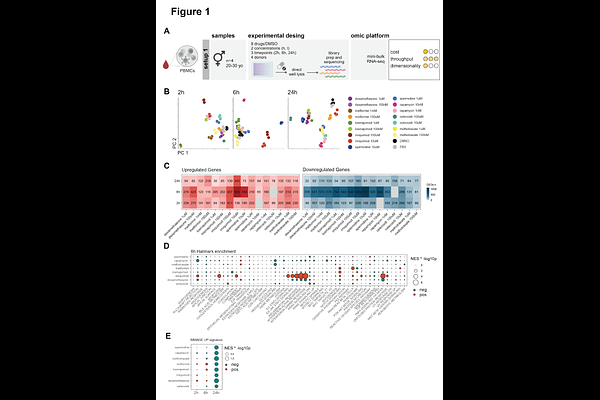
AbstractWith advancing age, the immune system's capacity to effectively combat pathogens diminishes. This decline of the overall immune function impacts both the innate and adaptive compartments, contributing in many cases to a systemic state of chronic inflammation which further increases the risk of the most prevalent non-communicable diseases and severe infections. Given the increase in median life expectancy with a demographic development towards a larger number of elderly people, identifying interceptive strategies to mitigate the individual and societal impact of diseases related to immune aging is of paramount importance. We developed a molecularly defined strategy to guide interventions with the aim to reduce immune aging. We introduce an omics-based drug screening platform to identify and characterize the pharmacological profile of immune senomodulators applicable to cross-age human cohorts using human-derived peripheral immune cells. To this aim we developed a robust experimental approach to screen for effective anti-aging compounds directly on human cells. This methodology allows us to quickly screen for drug candidates at different scales: from cost-effective bulk transcriptomics for a broader high-throughput overview of cellular responses, down to single-cell resolution approaches for a more detailed look at gene expression and other molecular data. This in vitro screening method is designed to maximize the clinical relevance of our findings, providing a direct link between preclinical research and patient care. By analyzing how different compounds affect the immune cells of individual persons, we can identify treatments that are most likely to be effective against aging in a subject-specific manner, a key step toward personalized medicine. In short, our approach enables a faster translation of anti-aging immune treatments from the lab to the clinic, tailoring them to each individual's unique biological makeup.