Sequence determinants of efficient exon 44 skipping in Duchenne muscular dystrophy define design principles for steric-blocking antisense oligonucleotides

Sequence determinants of efficient exon 44 skipping in Duchenne muscular dystrophy define design principles for steric-blocking antisense oligonucleotides
Han, E.; Webster, K.; Stan, T. L.; Tanganyika-de Winter, C.; van der Pijl, E.; Tahquechi, J.; Heglar, B.; Koehler, C.; Papangeli, I.; Mackenzie, D.; Crawford, B. E.; Aartsma-Rus, A.; Hartl, T. A.
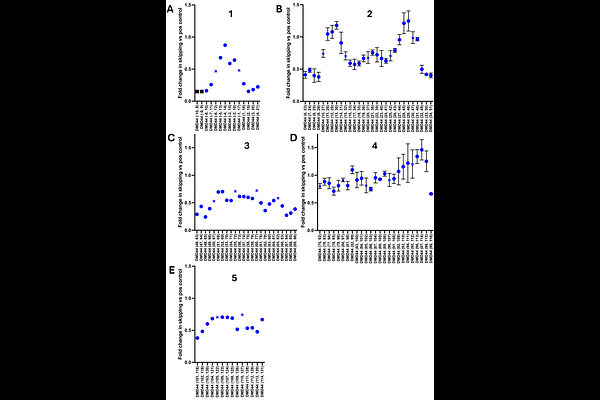
AbstractDuchenne muscular dystrophy (DMD) is caused by mutations in the DMD gene that disrupt the reading frame and abolish expression of functional dystrophin protein. Antisense oligonucleotides (ASO) can restore production of partially functional dystrophins by inducing exon skipping to restore the reading frame of dystrophin transcripts. While exon skipping is an FDA approved therapeutic strategy, there are currently no approved therapies for patients amenable to exon 44 skipping (8% of DMD patients). Here, we carried out a discovery campaign to identify phosphorothioate (PS) ASOs that efficiently induce exon 44 skipping and to define key sequence and chemistry features associated with activity. A tiling and micro-tiling approach with 18mer fully PS and 2-O-methoxyethyl (2MOE) modified ASOs in patient-derived myotubes identified five exonic target regions that promote skipping. ASO activity was strongly correlated across skeletal muscle and iPSC-derived cardiomyocytes, indicating similar exon 44 splicing regulation across cell types. Optimization studies showed that for 2MOE PS ASOs, 16-20mers were generally most active, while longer ASOs often had reduced activity due in part to impaired productive uptake into cells. Swapping out 2MOE modifications at both terminal positions for locked nucleic acids (LNAs) rarely improved activity and could also reduce it. Finally, promising candidates were tested in a humanized mouse model with an exon 44 skippable deletion, where one ASO outperformed others, inducing dose-dependent exon 44 skipping and dystrophin restoration in mouse models. These findings define practical design rules for exon 44-targeted ASOs and provide a foundation for therapeutic development.