Windthrow-generated tip-up mounds create contrasting regeneration niches for red oak and black cherry in a deer-browsed Carolinian forest

Windthrow-generated tip-up mounds create contrasting regeneration niches for red oak and black cherry in a deer-browsed Carolinian forest
Anyomi, K.; Duan, J.
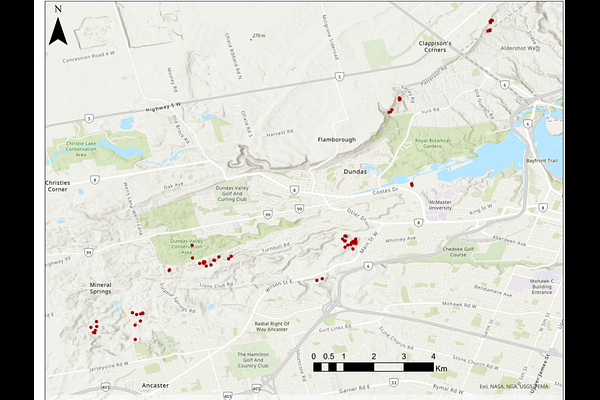
AbstractCarolinian old-growth forests in southwestern Ontario are among the most biodiverse ecosystems in Canada, yet regeneration of several canopy tree species is increasingly constrained by intense white-tailed deer browsing and changing disturbance regimes. Windstorms frequently uproot trees in this region, creating tip-up mounds that alter soil structure, drainage, and microtopography. These microsites may provide important opportunities for seedling establishment, but their role in forest regeneration remains poorly understood. This study examined how tip-up mound microsites differ from adjacent ground microsites in soil properties and how these differences influence seedling survival. A total of 84 tip-up mounds were sampled across several conservation areas in Hamilton, Ontario. For each mound, soil samples were collected from the mound top and adjacent forest floor and analyzed for soil moisture, pH, organic matter, and texture. Seedlings of two deer-preferred native species, red oak (Quercus rubra) and black cherry (Prunus serotina), were planted on mound tops and adjacent ground microsites, and their survival was monitored over the growing season. Ground microsites had significantly higher soil moisture and organic matter than mound tops, whereas mound tops were consistently drier. Seedling responses differed between species: red oak survival was higher on ground microsites, while black cherry survival was higher on mound tops. Logistic regression analyses indicated that soil moisture was the strongest predictor of seedling survival, with contrasting responses between the two species. These results suggest that tip-up mounds create distinct environmental conditions that selectively favor different regeneration strategies. As white-tailed deer browsing continues to suppress regeneration on the forest floor - particularly in areas of high deer activity and low wildlife species richness - while windthrow frequency rises under climate change, tip-up mounds are poised to become increasingly critical regeneration niches for species capable of establishing under drier, well-aerated microsite conditions.