A biosecurity baseline for transboundary management of marine biological invasions in the ROPME Sea Area

A biosecurity baseline for transboundary management of marine biological invasions in the ROPME Sea Area
Vilizzi, L.; Abbas, A. M.; Mubarak, M. A.; Alavi, M. H.; Shojaei, M.; Moghaddas, D.; Rahmani, H.; Albu Salih, A. A. R.; Al-Khayyat, M. F. A.; Al-Faisal, A. J.; Al-Marhoun, A. F.; Abdulhussain, A. H.; Alkhamees, J.; Karam, Q. E.; Behbehani, W.; Al Rezaiqi, M.; Al Tarshi, M.; Salman, S. F.; Al Jamaei, A. M.; El Mahdi, M. E. A.; Mohamed, A. A.; Sabbagh, E. I.; Mehzoud, N.; Al Shamsi, O. A. H.; Al-Wazzan, Z.
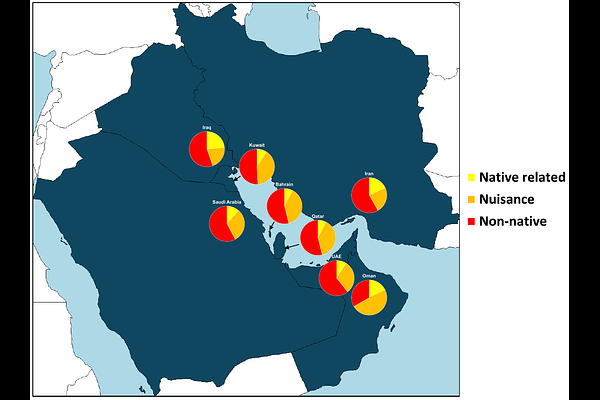
AbstractMarine and brackish-water ecosystems are increasingly degraded by cumulative human pressures, with biological invasions representing a major driver of biodiversity loss, ecosystem disruption, and socio-economic impacts. Effective management requires regionally harmonized and scientifically robust baselines capable of supporting coordinated transboundary decision-making. Here we present the first consolidated marine biosecurity baseline for the Regional Organization for the Protection of the Marine Environment (ROPME) Sea Area, a transboundary region characterized by extreme environmental conditions and increasing biosecurity pressure. A total of 192 species (123 extant and 69 horizon), including birds, fishes, tunicates, invertebrates, plants, and chromists, were systematically reviewed, taxonomically validated, and cross-checked against major databases and Member State inputs. Re-evaluation of a previous regional screening revealed substantial inconsistencies, with 24 species ({approx}18%) requiring status correction or exclusion. The resulting consolidated inventory comprised 130 validated retained species supplemented by 62 additional taxa. Extant species were classified according to biogeographic origin and impact status, whereas horizon species were evaluated based on introduction pathways, environmental suitability, and projected climate trends. Risk screening under current and projected climate conditions identified 39 extant species as very high risk, providing an operational basis for progression to full risk assessment and coordinated regional biosecurity management.