Microbiome contribution to Indy longevity in Drosophila

Microbiome contribution to Indy longevity in Drosophila
Lesperance, D. N. A.; Padhi, S.; Marco, J.; Olson, S.; Stanwood, E.; Kannan, K.; Graveley, B.; Rogina, B.; Broderick, N. A.
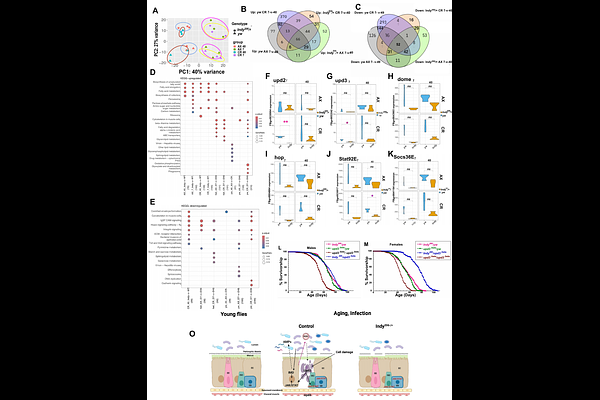
AbstractReduction in the Indy (I'm not dead yet) gene, a plasma membrane citrate transporter, in Drosophila and its homolog in worms extends lifespan by promoting metabolic homeostasis. Indy reduction delays the onset of aging-associated pathology in the fly midgut, including preservation of intestinal barrier integrity and intestinal stem cell homeostasis. Gut microbiota has broad impacts on host metabolism, health, and aging. Age-related dysbiosis impairs intestinal barrier function and drives mortality. However, the underlying mechanisms that link increased microbial load to frailty and negative effects on health remain mostly unclear. Here we show that Indy heterozygote flies have significantly lower bacterial load and increased diversity during aging compared to controls. However, the presence of the microbiome was not required for Indy lifespan extension, though removal of microbes did enhance the effects of Indy reduction on longevity, suggesting potential interactions between the microbiome and Indy. Indy down-regulation was linked to reduced expression of the JAK/STAT signaling ligands Upd3 and Upd2 in the midgut of young flies, which likely contributes to preserved intestinal stem cell homeostasis. Altogether, our results suggest that Indy reduction impacts microbiome load and composition, which preserves gut homeostasis and extends lifespan through impacts on JAK/STAT signaling pathway.