CHRFAM7A overexpression in human iPSC-derived Interneurons dysregulates α7-nAChR surface expression and alters response to oligomeric β-amyloid peptide

CHRFAM7A overexpression in human iPSC-derived Interneurons dysregulates α7-nAChR surface expression and alters response to oligomeric β-amyloid peptide
Llach Pou, M.; Thiberge, C.; Pons, S.; Maskos, U.; Cloez-Tayarani, I.
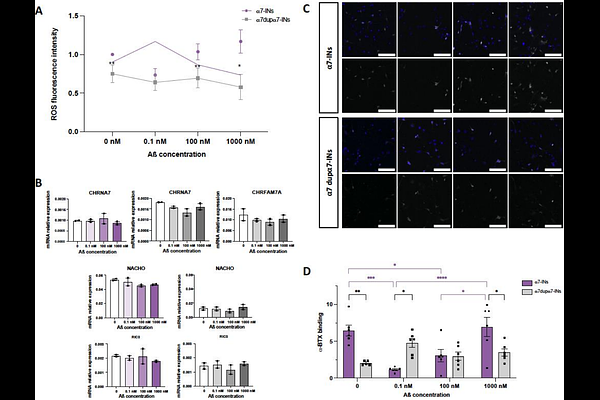
AbstractThe alpha7 neuronal nicotinic receptor (alpha7-nAChR) gene, CHRNA7, is widely expressed within the brain and at the periphery. It plays various important roles in cognition and immune functions. Decreased expression of alpha7-nAChR has been associated with Alzheimer disease (AD) triggered by the accumulation of the 42-amino acid beta-amyloid peptide (ABeta1-42). The interactions of this peptide with alpha7-nAChR may represent a pivotal mechanism that is involved in pathogenesis of AD. The regulation of CHRNA7 is a complex process. Normal function of alpha7-nAChR in mammalian cells requires the co-expression of chaperone proteins such as RIC3 and NACHO which facilitate the formation of cell surface receptors. In humans, CHRNA7 regulation also involves the specific chimeric CHRFAM7A gene product dupalpha7, which may assemble with alpha7 subunits and lead to dominant negative regulation of alpha7-nAChR function. To further elucidate the complex interplay between CHRFAM7A gene product (dupalpha7), alpha7-nAChRs and ABeta1-42, we used human induced pluripotent stem cells (iPSC)-derived interneurons (INs). Four iPSC lines were analyzed for the presence of CHRFAM7A copies. Among them, a cell line with a null genotype was selected for the lentiviral overexpression of CHRFAM7A. Our data show that overexpression of CHRFAM7A led to a reduction in the surface detection of alpha7-nAChR ligand binding sites in iPSC-derived INs. INs expressing the alpha7-dupalpha7 subunit (alpha7-dupalpha7-INs) exhibited lower levels of RIC3 and NACHO. Upon agonist treatment by nicotine, an up-regulation of alpha7-nAChR ligand binding sites was observed in alpha7-dupalpha7-INs as compared to non-transduced INs (alpha7-INs). At low levels of ABeta treatment, alpha7-INs displayed a significant reduction in production of reactive oxygen species (ROS), while high levels resulted in a slight increase. In contrast, alpha7-dupalpha7-INs exhibited lower baseline levels of ROS that remained unaltered by A Beta treatment. ROS are known to exacerbate AD pathogenesis. We hypothesize that such effects may also be triggered by alpha7-dupalpha7-INs in the brain of patients. Further investigations are currently undertaken to confirm this hypothesis.