Deciphering Parasitic Strategies: Dual Transcriptomics Reveal Distinct Infection Mechanisms and Gall-like Traits in Rafflesiaceae

Deciphering Parasitic Strategies: Dual Transcriptomics Reveal Distinct Infection Mechanisms and Gall-like Traits in Rafflesiaceae
Bürger, M.; Wicaksono, A.; Pell, S.; Mamerto, A.; Michael, T. P.; Molina, J.
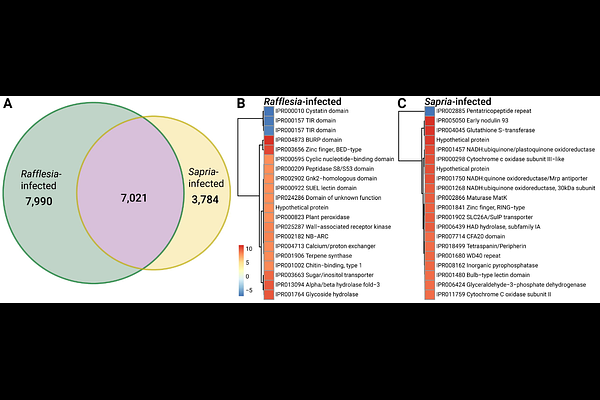
AbstractRafflesiaceae, known for producing the largest flowers in the world, are obligate parasites that exclusively infect Tetrastigma sp. (Vitaceae). Despite their unique biology, the interactions between parasitic tissues and host roots remain poorly understood, particularly during the flower morphogenesis phase, where parasitic tissue erupts through the host root. Here, we performed dual transcriptome analyses of two Rafflesiaceae species and their respective Tetrastigma hosts: Sapria himalayana with T. cauliflorum and Rafflesia speciosa with T. magnum. Our findings reveal species-specific transcriptional responses in Tetrastigma, suggesting divergent parasitism strategies between Rafflesia and Sapria. Moreover, we identify molecular signatures of parasitism that parallel plant gall formation, particularly in genes governing cell wall modification and host tissue reorganization. Unlike bacterial or insect-induced galls, these mechanisms may involve fungal symbionts, highlighting the unique nature of these interactions. Together, our results demonstrate that Rafflesiaceae parasitism represents a complex tripartite relationship among host, holoparasite, and associated microbes, offering new insights into the hidden biology of these remarkable parasitic plants.