A spatial and temporal atlas of tubulin isotype expression during neural crest EMT

A spatial and temporal atlas of tubulin isotype expression during neural crest EMT
Echeverria, C. V.; Ramarapu, R.; Diaz Batista, N.; Torres Lopez, C.; Mendez, J. N.; Rogers, C. D.
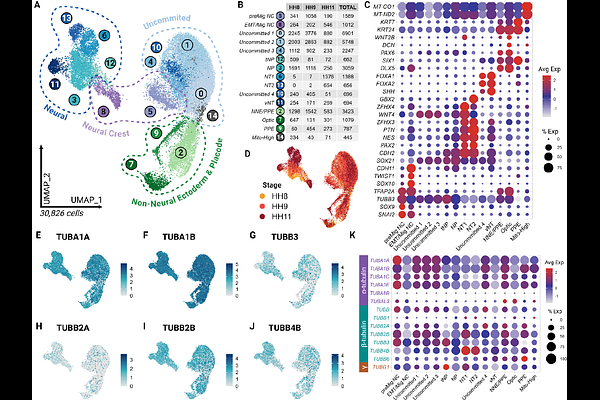
AbstractNeural crest (NC) cells are dynamic embryonic stem cells that undergo an epithelial-to-mesenchymal transition (EMT) and alter their cell states from tightly adherent to migratory and invasive during early development. While EMT transcriptional programs are well characterized, how cytoskeletal architecture is developmentally patterned across EMT states remains poorly understood. Here, we present a spatial and temporal atlas of - and {beta}-tubulin isotype gene expression during NC EMT in the chick embryo. Single cell RNA-sequencing reveals diversity in tubulin isotype gene expression from ubiquitous (TUBA1A, TUBA1B) to cell type specific (TUBAL3, TUBB4B). In addition, we identified novel enrichment of several tubulin isotypes in NC and NC-associated clusters (TUBB3, TUBA3E, TUBG1). Using fluorescent in situ hybridization chain reaction (HCR), we focus on NC EMT and migration states to validate and spatially resolve these expression patterns. Additional characterization in differentiated cells reveals tubulin gene expression in specific neuronal and myogenic populations. We further identify expression of the microtubule motor genes KIF11 and DYNC1LI1 within neural tube and NC populations, suggesting coordinated regulation of microtubule composition and cargo transport capacity. Together, these data establish that vertebrate NC EMT is accompanied by systematic reprogramming of tubulin gene expression and provide a developmental resource for investigating cytoskeletal control of cell state transitions.