Abnormal enteric nervous system organization and gastrointestinal motility in mice with valproic acid-induced neural tube defects

Abnormal enteric nervous system organization and gastrointestinal motility in mice with valproic acid-induced neural tube defects
Barsh, G. R.; Banducci, K.; Kaltschmidt, J. A.
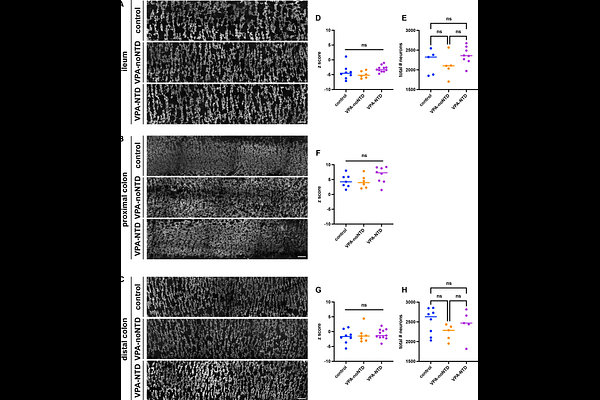
AbstractBackground: Neurogenic bowel is a major cause of morbidity in patients affected by neural tube defects (NTDs) such as spina bifida, but the underlying reasons for bowel dysfunction are unknown. An absolute requirement for gastrointestinal (GI) motility is the enteric nervous system (ENS) located within the walls of the GI tract. Enteric neurons coalesce into circumferential stripes throughout embryonic and early postnatal development, and this gradual organization of the ENS into enteric neuronal stripes correlates with the emergence of neurogenic GI motility. We hypothesized that NTDs are associated with changes in ENS organization that correlate with specific GI motility defects. Methods: We used prenatal valproic acid (VPA) exposure as a model for NTDs in embryonic mice. We used immunohistochemistry, high resolution confocal imaging, and ex vivo motility assays to assess enteric neuronal stripes and gastrointestinal motility in embryos with a VPA-induced neural tube defect. Key results: GI tracts from embryos with a VPA-induced NTD contain blood. Structurally, the enteric neuronal stripes are thinner with a narrower interstripe distance, leading to an increased number of stripes. Functionally, GI motility is abnormal, with increased contraction frequency and increased length of contractile segments. Conclusions and inferences: ENS organization and GI motility are disrupted in mouse embryos with a VPA-induced NTD. This has important implications for our understanding of neurogenic bowel in central nervous system diseases such as spina bifida.