HIV-1 Reverse Transcriptase interactions with Long-acting NNRTI, Depulfavirine (VM1500A)

HIV-1 Reverse Transcriptase interactions with Long-acting NNRTI, Depulfavirine (VM1500A)
Snyder, A. A.; Kaufman, I. L.; Risener, C. J.; Kirby, K. A.; Sarafianos, S. G.
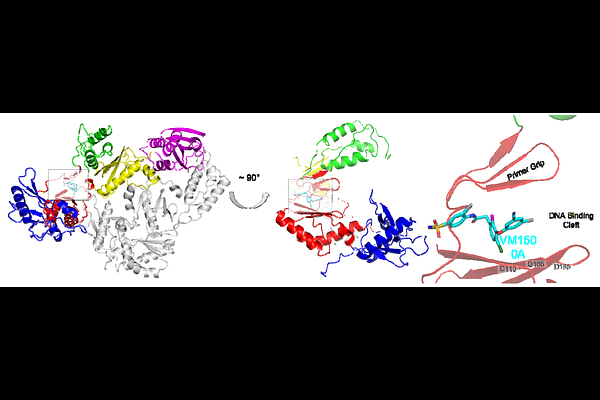
AbstractNon-nucleoside reverse transcriptase inhibitors (NNRTIs) are key components of combination antiretroviral therapy (ART) for the treatment of human immunodeficiency virus type 1 (HIV-1) infection, binding an allosteric pocket of reverse transcriptase (RT) and inhibiting viral replication. Although second-generation NNRTIs have improved potency and resistance profiles compared to first-generation NNRTIs, the continued emergence of resistant viral strains and the need for long-acting therapeutic options underscore the importance of developing next-generation compounds. Depulfavirine (VM1500A) is a potent NNRTI being developed for long-acting formulations. Its prodrug, elsulfavirine (ESV), is approved for HIV-1 treatment in Eurasian countries as a once-daily oral regimen and has demonstrated favorable antiviral efficacy, pharmacokinetics, and tolerability in clinical studies. Here, we report the 2.4 angstrom crystal structure of HIV-1 RT in complex with depulfavirine, revealing an extended binding conformation within the NNRTI pocket that reaches from the back of the binding pocket to the entrance. These interactions may shed light on mechanisms of resistance to the F227C mutation, with and without V106A, and Y188L. Notably, depulfavirine maintains potent inhibition of common NNRTI-resistant RT variants, including K103N and Y181C. Combination studies of ESV with antivirals from diverse families demonstrated additive or near-synergistic activity with islatravir (ISL), cabotegravir (CAB), lenacapavir (LEN), and tenofovir (TDF). These findings highlight the broad resistance profile and combination potential of depulfavirine.