Ethyl-iophenoxic acid as a serum biomarker for marsupial species in oral bait trials

Ethyl-iophenoxic acid as a serum biomarker for marsupial species in oral bait trials
Nofs, S. A.; Pye, R. J.; Nichols, D. S.; Johnson, S. R.; Gilbert, A. T.; Lazenby, B.; Flies, A. S.
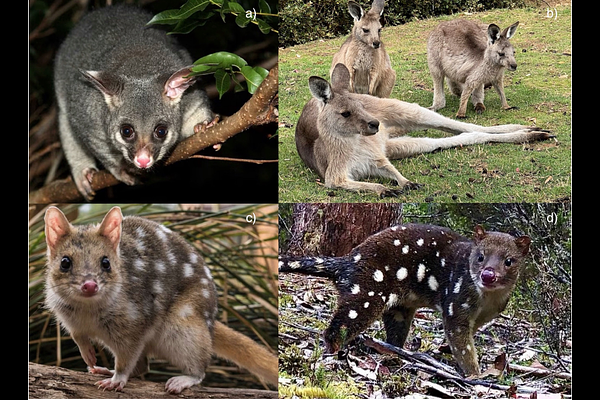
AbstractEthyl-iophenoxic acid (Et-IPA) is widely recognized as a useful biomarker to confirm oral bait consumption in eutherian species. In historical studies on marsupials, Et-IPA was rapidly eliminated from brushtail possums (Trichosurus vulpecula) and swamp wallabies (Wallabia bicolor) suggesting limited use for marsupial species. However, a 1 mg oral dose of Et-IPA was detectable in the marsupial Tasmanian devils (Sarcophilus harrisii) for [≥] 56 days suggesting the biomarker can be used in a devil bait vaccine program. To assess Et-IPA marking in off-target marsupials that may consume baits, we administered 1 mg oral doses of Et-IPA to brushtail possums, forester kangaroos (Macropus giganteus tasmaniensis), spotted-tailed quolls (Dasyurus maculatus) and eastern quolls (Dasyurus viverrinus). Liquid chromatography with tandem mass spectrometry was used to detect and quantify serum Et-IPA. Et-IPA was detected in the serum on day 2 but was not detected by day 14 in any of the species tested, including the two quoll species which are in the same carnivorous Dasyuridae family as the devils. The rapid elimination of Et-IPA in the marsupials included in this study suggests it is not useful as a biomarker for these species. Furthermore, rapid elimination in the kangaroos and possums suggests that Et-IPA is unlikely to accumulate in the food chain following distribution of Et-IPA-marked oral bait vaccines for Tasmanian devils.