Prevalence of Mycoplasmopsis agassizii across wild and captive Mediterranean tortoises

Prevalence of Mycoplasmopsis agassizii across wild and captive Mediterranean tortoises
Canos-Burguete, M.; Gimenez, A.; Martinez-Silvestre, A.; Budo, J.; Marschang, R. E.; Sanchez-Ferreiro, B.; Rodriguez-Caro, R.; Gracia, E.
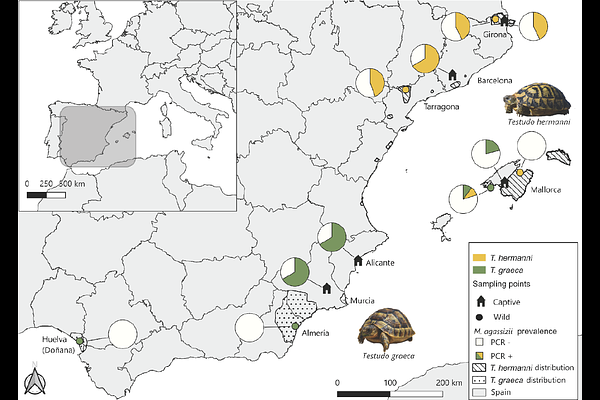
AbstractMycoplasmopsis [Mycoplasma] agassizii is one of the principal pathogens associated with upper respiratory tract disease (URTD) in tortoises, yet its epidemiology in European wild chelonian populations remains poorly understood. The pathogen has been linked to population declines in some wild tortoises populations and is frequently detected in captive tortoises, where infections may persist subclinically and prolonged contact can facilitate transmission. In this context, the pet trade and the release or escape of captive individuals represent potential pathways for pathogen exchange between captive and wild populations. We assessed the presence and prevalence of M. agassizii-like agents in wild Mediterranean tortoises in Spain and compared infection patterns with captive populations. A total of 259 tortoises were sampled between 2020 and 2025, including spur thighed tortoises (Testudo graeca; 127 wild; 63 captive) and Hermann tortoises (Testudo hermanni; 46 wild; 23 captive). Detection of M. agassizii was performed using PCR. The pathogen was detected in both species, but prevalence patterns differed markedly between captivity status and species. High prevalence was consistently observed in captive individuals of both species. In contrast, wild populations showed species-specific patterns: T. graeca exhibited very low or absent prevalence across wild populations, whereas T. hermanni showed comparatively higher prevalence in the wild. These results provide the first baseline assessment of M. agassizii occurrence in Mediterranean tortoises in Spain and highlight the importance of incorporating pathogen surveillance into conservation and management strategies for European chelonian populations.