Impact of Sequential Processing (Boiling and Fermentation) on the Nutritional, Anti-nutrient, and Antioxidant Profile of Manihot esculenta Tubers.

Impact of Sequential Processing (Boiling and Fermentation) on the Nutritional, Anti-nutrient, and Antioxidant Profile of Manihot esculenta Tubers.
Bassey, G. E.; Jimmy, E. O.; Olatunbosun, T. H.
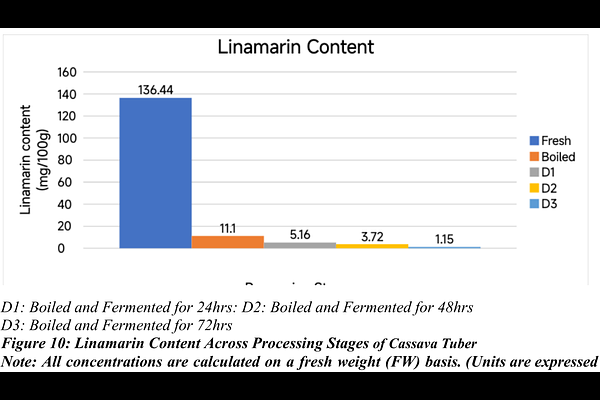
AbstractBackground: Manihot esculenta (Cassava) is a vital staple in Sub Saharan Africa, yet its high levels of cyanogenic glycosides and anti-nutrients pose health risks. While boiling is common, its holistic impact on the nutritional biochemistry and antioxidant profile of the Farmers Pride (IBA 961632) variety remains under characterized. This study evaluated the sequential impact of food processing i.e. boiling and multi-stage fermentation, on cassava's toxicological and bioactive profiles. Methods: Fresh tubers were boiled for 10 minutes and fermented for 24, 48, and 72 hours. Proximate composition, vitamins, and anti-nutritional factors (cyanide, oxalate, phytate) were quantified. Linamarase activity and total phenolic and flavonoid contents were measured to assess enzymatic detoxification and phytotherapeutic potential. Results: Boiling concentrated carbohydrates but created a nutrient void, leaching 93% of Vitamin C. However, fermentation acted as a biochemical refinery; by 72 hours, total cyanide plummeted from 98.15 to 0.54 mg/100g, meeting WHO safety standards. Concurrently, fermentation triggered a resurgence in bioactives, significantly increasing phenolic and flavonoid levels. Conclusion: Boiling alone is insufficient for detoxification. Sequential fermentation beyond 48 hours is essential to rescue antioxidant potential and ensure safety. The 72 hours fermented tuber represents an optimized bioactive food vehicle for managing oxidative stress-related pathologies like prostatic hyperplasia