Evolutionary algorithms accelerate de novo design of potent Nectin-4-specific cancer biologics

Evolutionary algorithms accelerate de novo design of potent Nectin-4-specific cancer biologics
Tan, E.; Frechen, S. C.; Broske, B.; Messmer, J. M.; Kempchen, T. N.; McEnroe, B. A.; Ferber, D.; Waluga, L.; Below, E.; Hoch, A.; Yong, M. C.; Oldenburg, J.; Rühl, H.; Geyer, M.; Toma, M. I.; Klümper, N.; Bald, T.; Schmid-Burgk, J. L.; Hölzel, M.; Hagelueken, G.
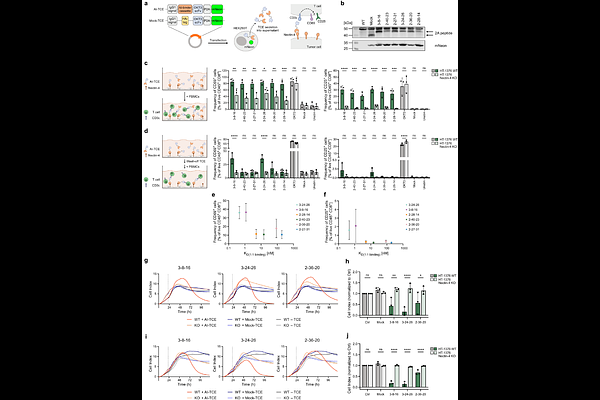
AbstractRecent advances in AI-based structural biology have made de novo protein binder design increasingly effective, yet performance remains highly target dependent. For instance, the cancer surface antigen Nectin-4, an immunoglobulin-like cell adhesion protein, proved particularly challenging for RFdiffusion-based minibinder generation, yielding substantially fewer high-quality candidates than related targets. To address this bottleneck, we integrated an evolutionary genetic algorithm (GA) with AI-driven design. GA selection with tunable stringency was coupled with diversification via partial diffusion or direct sequence editing, enabling efficient exploration of sequence-structure space and rapid enrichment of promising candidates. This AI-GA pipeline quickly produced large and diverse minibinder panels with very good in silico quality metrics and is compatible with inputs from multiple design algorithms. Pooled, large-scale experimental screening identified highly stable Nectin-4 minibinders with single-digit nanomolar down to subnanomolar affinities. Lead binders were further engineered into Nectin-4-specific flow cytometry detection reagents and potent bispecific T cell engagers, demonstrating functional activity beyond binding. Together, these results show that evolutionary refinement can unlock challenging targets and accelerate de novo protein design for next-generation cancer biologics.