Inducible activation of PKA in osteoblasts causes a profound high bone turnover phenotype similar to human diseases

Inducible activation of PKA in osteoblasts causes a profound high bone turnover phenotype similar to human diseases
Le Henaff, C. A.; He, Z.; Johnson, J. H.; Warshow, J.; Latorre, R.; Bunnett, N. W.; Sitara, D.; Kirschner, L. S.; Kronenberg, H. M.; Partridge, N. C.
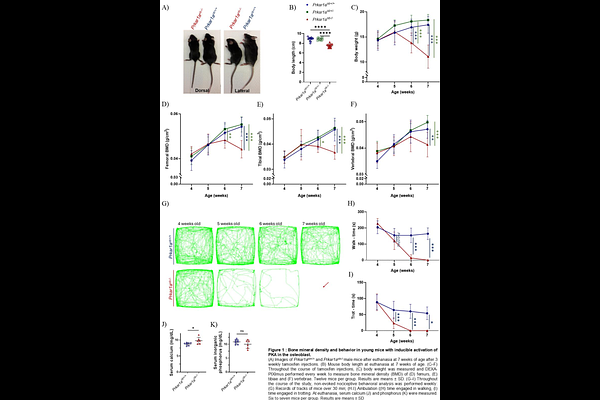
AbstractProtein kinase A (PKA) is involved in bone biology and is a key mediator of parathyroid hormone signaling in the osteoblast. However, the consequences of sustained PKA activation in bone are unclear. In this study, we inducibly activated PKA in osteoblasts by deleting its major regulatory subunit, Prkar1a, using a Col11-driven Cre system. Prkar1aob-/- mice demonstrated rapid and profound bone pathologies in their femurs, lumbar and caudal vertebrae with cortical bone breakdown and cortical trabecularization. This phenotype was characterized by increased bone turnover and elevated osteoblastic and osteoclastic activities. Transcriptomic and qPCR analyses showed an impairment of osteoblast differentiation with a defect in ossification, expansion of stromal cells, and numbers of both osteoblastic and osteoclastic precursors. Moreover, there were alterations in gene expression of chemokines and Wnt members with enhanced osteoclastogenesis. Altogether, activation of PKA in osteoblasts by inducible deletion of Prkar1a causes a profound high bone turnover phenotype resembling several human bone diseases.