NMDA receptor-dependent presynaptic homeostatic plasticity?

NMDA receptor-dependent presynaptic homeostatic plasticity?
dou, t.; zhang, j.; hong, y.; chen, x.; nicoll, r.
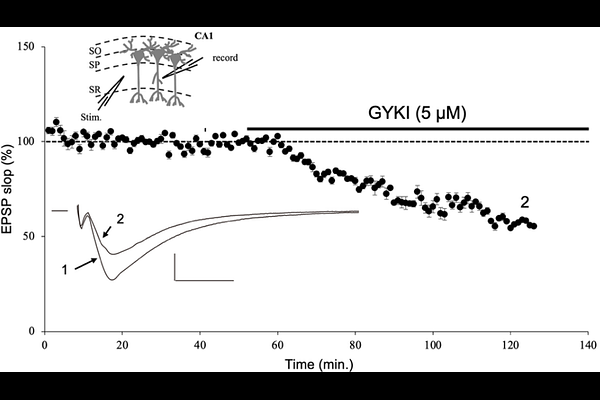
AbstractExcitatory glutamatergic synapses in the brain are remarkably plastic. Two forms of plasticity have received the most attention: long-term potentiation (LTP) and synaptic homeostasis. While LTP requires the activation of NMDA receptors, synaptic homeostasis does not. However, both phenomena are mediated by the recruitment of postsynaptic AMPA receptors to the synapses. Recently a new form of plasticity has been described referred to as presynaptic homeostatic plasticity (PHP) (Chipman et al., 2022; Chipman et al., 2025). Pharmacological inhibition of AMPA synaptic responses in CA1 hippocampal pyramidal cells initiates a rapid homeostatic response that results in the recovery of the AMPA responses to normal values in the continued presence of the inhibitor. Accompanying this recovery is a doubling of the NMDA response which is interpreted as an increase in the release of glutamate. This is provocative since it is the first report claiming that a reduction in AMPA responses triggers an enhancement in NMDA responses. Using three different protocols to monitor synaptic responses we fail to observe any recovery of synaptic responses in the presence of an AMPA inhibitor. Furthermore, there was no enhancement in NMDA responses. Thus, we find no evidence for the presence of PHP at CA1 hippocampal synapses.