Follow the wobble: Statistical methods to detect astrometric binary asteroids in Gaia FPR

Follow the wobble: Statistical methods to detect astrometric binary asteroids in Gaia FPR
Luana Liberato, Paolo Tanga, David Mary, Raphael Lallemand, Ziu Liu, Benoit Carry, Josselin Desmars, Daniel Hestroffer, Kate Minker, Alexandros Siakas
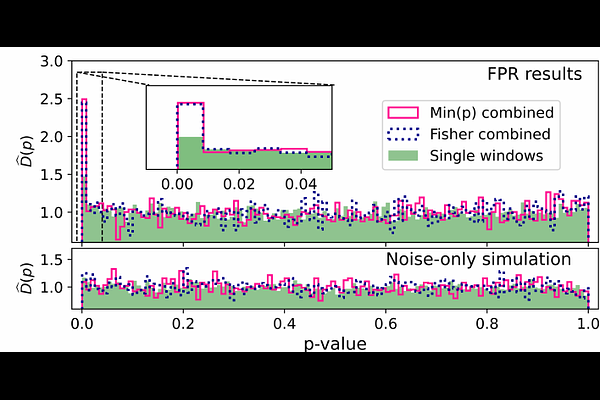
AbstractIn a previous article, we obtained the first-ever list of astrometric binary asteroid candidates. Some of these candidates have now been confirmed. In that previous work, however, the details of the statistical methods were not provided. Our first aim is to provide methodological details and performance evaluation of the approach used for detecting binaries. Our second aim is to establish an updated list of binary asteroid candidates from Gaia FPR astrometric residuals exploration, where we account for the statistical properties of FPR data. We account for the astrometric uncertainties from FPR and we refine the statistical model of the data, which we use in MC simulation to evaluate the strength of the individual detections; we set up a trend detection method in the residuals and apply a dedicated period search algorithm; we update the statistical selection process to build the list of candidates; we set up a method for detecting objects in multiple windows of consecutive observation; we refine the method for confidence interval estimation of these parameters and we better constrain the physical parameter selection. We detect 343 binary asteroid candidates corresponding to 410 windows of consecutive observations in the astrometric data. We show that in noise-only control simulations, the typical number of detections is 88% lower than in the FPR data. We also detect 9 known binaries, 25 candidates overlapping with the Pan-STARSS survey and 99 overlapping with our previous binary search in DR3. Finally, we report the detection of 45 objects with trends in residuals suggestive of wide binary systems. Our results and analyses demonstrate that although detecting binary asteroids is a difficult problem due to their low signal level, the proposed method is likely to provide a reliable list of detections, including systems poorly accessible to conventional techniques.